PPF vs ceramic coating — which do I actually need?
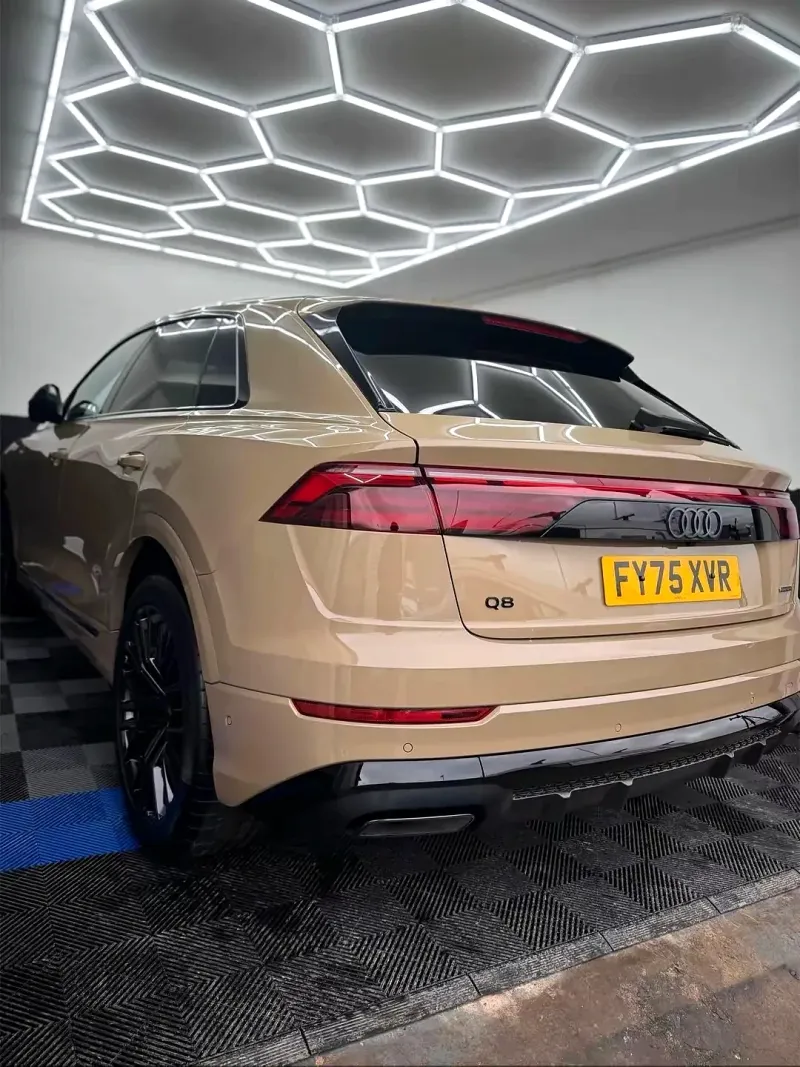
PPF or ceramic coating — which do I need?
They do different jobs. Paint protection film is a thick self-healing film that takes stone chips and scratches. Ceramic coating is a thin chemical layer that makes the paint easier to clean and more water-repellent, but won't stop a stone chip. Many people fit PPF on the impact areas and coat the rest of the car.
- — PPF: physical protection against chips and scratches
- — Ceramic: gloss, easier cleaning, water repellency
- — Ceramic does not stop stone chips
- — Ceramic from £400; full PPF from £3,000
What does PPF protect against?
Stone chips, road debris and light scratches on the panels it covers. It's usually fitted to the front-facing areas that take the most impact, or as full coverage. Details on the paint protection film page.
What does ceramic coating do?
Adds a hydrophobic layer over corrected paint, so the car cleans more easily and holds its gloss. Packages start at £400 for 2 years and include the appropriate paint correction — see ceramic coating.
Can I have both?
Yes, and it's a common combination: film on the impact areas, coating over the rest of the car.
Which should I choose if I only pick one?
If motorway stone chips are the concern, PPF. If the concern is washing, water spots and keeping the gloss, ceramic.
How is PPF priced?
Per vehicle, based on coverage and panel complexity — full PPF starts at £3,000, partial coverage is quoted. WhatsApp your reg for a firm quote.
Paint protection film in Dagenham
Studio-fitted by a small dedicated team. Drop the car off — we handle the rest.
See full service & pricing