Is ceramic coating worth it on a leased car?
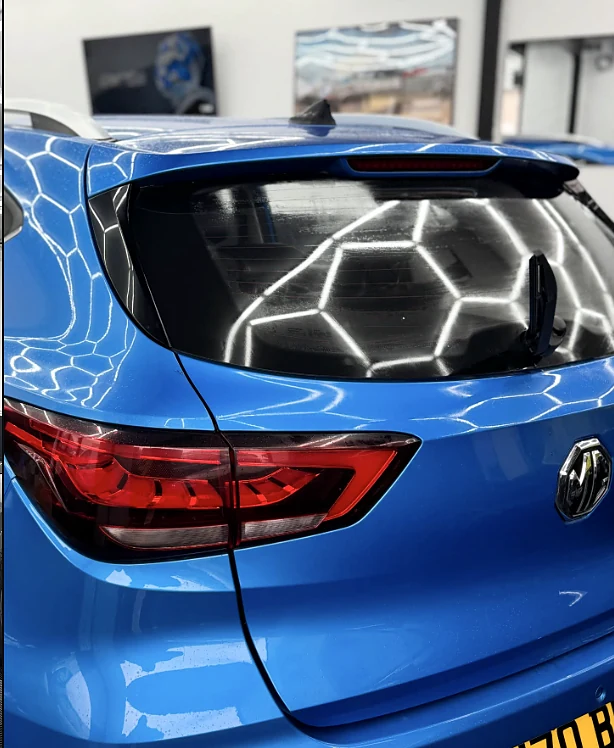
Is ceramic coating worth it on a leased car?
It depends mostly on how long is left on the lease. On a 3 to 4 year lease a coating makes the car far easier to keep clean and helps the paint resist swirls and etching over those years, which puts you in a better position at return. With only a few months left, the cost is hard to justify. A coating does not fix damage that is already there, and no coating guarantees you avoid end-of-lease charges.
- — Best value on a 3 to 4 year lease, not the last few months
- — Makes washing easier and safer for the paint
- — Helps resist swirls, etching and staining
- — Does not repair existing chips or scratches
- — No coating guarantees you avoid return charges
We get asked this a lot, usually by someone who has just picked up a new lease car and wants to protect it. It is a fair question and it deserves a straight answer rather than a sales pitch, because on some leases it genuinely is not worth the money.
What are you actually protecting against?
When a lease car goes back, it is inspected against the leasing company's fair wear and tear standard. Those standards exist so that normal use over the term is accepted, while avoidable damage can be charged for. Paint condition is part of that assessment — things like scratches, scuffs and marks are looked at, with thresholds that differ between providers. The important point is that the exact standard is set by your agreement, so the guide your leasing company publishes is the document that matters, not a generic checklist online.
What does a ceramic coating actually do for that?
A coating is a hard, hydrophobic layer bonded over the paint. In practice it means:
- Dirt and water release more easily, so washing takes less effort and less contact.
- Less contact means fewer wash-induced swirls, which is where most light paint damage on a daily driver comes from.
- Better resistance to etching and staining from bird lime, tree sap and general road grime.
- The gloss holds up over the years rather than dulling off.
Over a full lease term that adds up. A car that has been easy to wash properly for three years usually looks noticeably better at return than one that has been through a lot of rushed brush washes.
Where's the honest limit?
A coating does not stop stone chips, it does not undo damage that is already on the car, and it does not guarantee a clean inspection. Anyone telling you a coating means no return charges is selling, not advising. If your worry is specifically stone chips on the bonnet and bumper, that is a paint protection film conversation instead — see our PPF vs ceramic guide.
How does the maths work against lease length?
This is the part that decides it. A coating is a one-off cost that protects for years, so the more of that life you actually use, the better the value.
- 3 to 4 years remaining: the case is strongest. You get the easier washing and the paint protection across the whole term, and the cost spreads across the full lease.
- Around 18 to 24 months: a reasonable middle ground, particularly if the car sits outside, does high mileage or you want it to stay sharp with minimal effort.
- Under a year: hard to justify. Spend the money on a proper decontamination and correction closer to return instead.
What about a car that's already marked up?
Coating goes over the paint as it is, so existing swirls get sealed in. That is why we carry out the paint correction first and coat afterwards — the correction is what removes the defects and the coating is what preserves the finish. If the car has picked up marks already, correcting it now and coating it is the sequence that makes sense.
So — worth it or not?
If you have most of a lease ahead of you, want the car to be genuinely easy to keep clean, and you would rather hand it back in strong condition than gamble on it, then yes — it is a sensible spend. If the lease is nearly up, or the paint already needs significant work, put your money into correction and a good sealant instead. Prices and packages are on the ceramic coating page, or check full pricing — we will tell you straight if we think your car doesn't need it.
Common questions
- Will ceramic coating stop me getting end-of-lease charges?
- No, and nobody honest will promise that. Lease returns are assessed against fair wear and tear standards. A coating helps the paint stay in better condition over the lease and makes safe washing easier, which reduces the swirls and staining that build up over years — but chips, dents, kerbed wheels and accident damage are unaffected by it.
- What counts as fair wear and tear on a lease return?
- Fair wear and tear standards exist specifically so normal use is not charged for, while avoidable damage is. Every leasing company publishes its own guide and inspectors work to it. Read the guide for your own agreement rather than relying on general advice, because the thresholds vary.
- Is it worth it if I only have 8 months left?
- Usually not. You would be paying for years of protection and only using a fraction of it. With a short run remaining, a good decontamination wash, a machine polish where needed and a durable sealant will get the paint looking its best for return at a lower cost.
- Does ceramic coating hide existing scratches?
- No. Coating is applied over the paint as it is, so any existing swirls or scratches are locked under it. That is why we do the paint correction first — the correction is what removes the defects, and the coating is what protects the result.
- Am I allowed to coat a car I don't own?
- A coating is a protective layer over the factory paint rather than a modification to the vehicle, so it is not the same as a wrap or a body change. If you want certainty, check your own lease agreement's wording on paintwork treatments before booking.
- Is a wrap or PPF a better shout on a lease?
- They do different jobs. Paint protection film is the one that takes physical impact like stone chips, so it makes sense on high-strike areas such as the front end. Ceramic is about gloss, easy cleaning and chemical resistance. Our PPF versus ceramic guide compares them properly.
Ceramic coating in Dagenham
Studio-fitted by a small dedicated team. Drop the car off — we handle the rest.
See full service & pricing